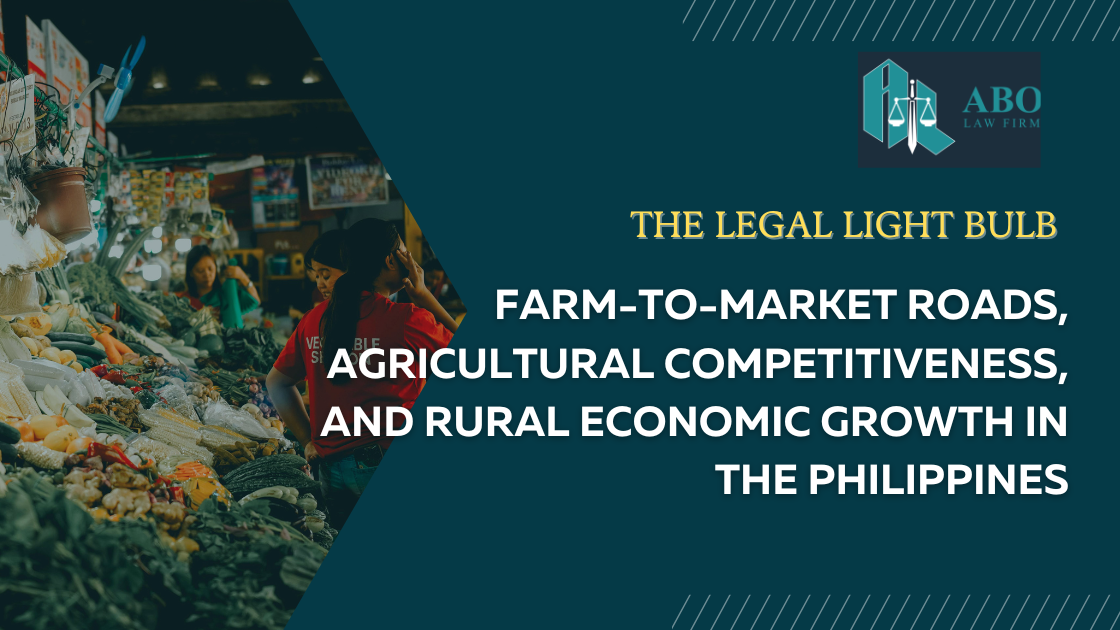
The development of farm-to-market roads (FMRs) is an essential component of agricultural modernization in the Philippines. Apart from subsidies, technology, and food security, infrastructure remains one of the most significant factors in developing the country’s Agricultural sector. Through the FMRs, farms are connected to markets, factories, and processing facilities, and commercial markets, reducing transportation costs, improving market access, and contributing to rural economic development.
Apart from its economic impact to the Agricultural sector, it also improves road connectivity, further making communities accessible and open for development.
Recently, the Philippine government undertook significant reforms in the implementation of the national FMR program. One of these reforms include lowering the costs of the FMR roads for 2026. It also led to the creation of a Department of Agriculture (DA) “watchdog” to prevent similar issues of delays and corruption with the controversial flood control projects.[1]
The DA assumed primary responsibility for the planning and implementation of FMR projects, a function previously undertaken primarily by the Department of Public Works and Highways (DPWH). The DA has announced that approximately 190 FMR projects are scheduled for procurement during the second quarter of the year, forming part of a larger program funded by a ₱33-billion allocation under the 2026 national budget. Furthermore, the DA also announced that implementation of the said project by April 2026.[2]
The transfer of responsibility to the DA reflects a policy determination that agricultural infrastructure should be planned and prioritized by the agency most directly familiar with the needs of farmers and fisherfolk. Under Administrative Order (AO) No. 4, Series of 2026, priority projects are to be identified based on commodity development roadmaps, the concentration of agricultural producers, and poverty indicators. The Order likewise allows local government units, farmers’ organizations, and community groups to propose projects for consideration, thereby encouraging greater stakeholder participation in infrastructure planning.
The new framework also emphasizes transparency and accountability. Project implementation is subject to monitoring mechanisms designed to provide public access to information and strengthen oversight. Such measures are particularly important given the substantial public funds allocated to rural infrastructure and the need to ensure that projects are completed efficiently and in accordance with applicable standards.
Nevertheless, challenges remain. The success of the FMR program will depend not only on funding but also on effective project implementation, proper maintenance, and continued coordination among national agencies and local governments. Infrastructure projects must likewise be designed to withstand the effects of natural disasters, which frequently disrupt agricultural production and transportation networks throughout the country.
FMRs play a vital role in strengthening the agricultural sector and improving the lives of millions of Filipinos. As the government continues to expand and reform the program, these roads will remain indispensable pathways toward sustainable agricultural and economic development.
Abo and Peñaranda Law can provide assistance on government procurement, regulatory compliance, contract negotiation, project structuring, and other matters involving engagement with government agencies and public sector projects. We provide legal support to clients navigating the complexities of public infrastructure and government-funded initiatives, helping them manage risks, ensure compliance, and achieve their project objectives effectively.
Written by: Atty. John Ezra Villar
[1] https://www.gmanetwork.com/news/topstories/nation/969626/explainer-what-are-farm-to-market-roads/story/
[2] https://www.pna.gov.ph/articles/1268064