Legal Framework and Policy Foundation
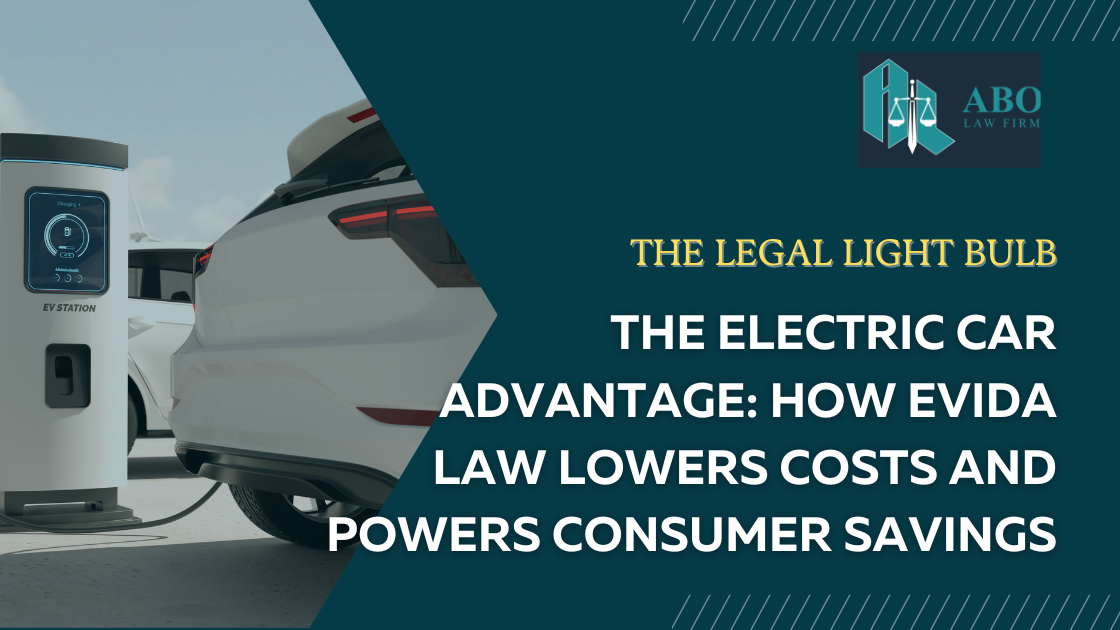
Republic Act No. 11697, or the Electric Vehicle Industry Development Act (EVIDA Law), establishes a national framework for the development, regulation, and promotion of electric vehicles in the Philippines. Enacted to advance sustainable transport and reduce dependence on imported fossil fuels, the law reflects the State’s policy to promote energy security, environmental protection, and technological innovation in mobility.
Within this framework, EVIDA is not merely regulatory but economic in design. It restructures transportation costs through a system of fiscal and non-fiscal incentives that directly benefit consumers.
Fiscal Incentives: Direct Cost Reductions for Consumers
EVIDA introduces a set of fiscal incentives that directly reduce the financial burden associated with owning and operating electric vehicles. These incentives are deliberately designed to address both upfront acquisition costs and recurring regulatory expenses.
1. Lower Registration and Regulatory Fees
One of the most immediate benefits under the law is the reduction of motor vehicle user charges, registration fees, and inspection-related costs for electric vehicles. Battery electric vehicles are granted higher reductions compared to hybrid vehicles, reflecting the State’s clear preference for zero-emission transport technologies.
These reductions are not one-time benefits. Instead, they operate on a recurring basis over a defined incentive period, resulting in cumulative savings for consumers throughout the life of the vehicle.
2. Importation and Tax Incentives
The law further strengthens affordability by supporting tax-related incentives, including reduced import duties for electric vehicles and critical components such as batteries and charging equipment. These incentives extend beyond finished vehicles and cover the broader supply chain necessary for EV adoption. These measures lower acquisition costs and improve affordability in the consumer market.
Over time, these creates a transmission effect where cost reductions at the policy level gradually translate into lower consumer prices. In theory, this also narrows the historical price gap between electric vehicles and internal combustion engine vehicles, making EVs more accessible to middle-income consumers.
Non-Fiscal Incentives: Everyday Economic Efficiency
EVIDA also provides non-fiscal incentives that generate practical, day-to-day savings for EV users.
1. Traffic Exemptions
Electric vehicle owners are exempted from number coding schemes and similar traffic restrictions. This increases vehicle utility and reduces reliance on alternative transport, resulting in indirect cost savings.
2. Administrative and Mobility Benefits
The law provides priority registration and renewal processes, dedicated parking spaces, and preferential treatment in transport-related facilities. These benefits reduce time costs and improve convenience.
3. Productivity Gains
Beyond direct financial savings, non-fiscal incentives create value through time efficiency. Reduced delays and unrestricted mobility enhance productivity, particularly for urban commuters.
Infrastructure Development and Cost Efficiency
A key feature of EVIDA is the development of a nationwide charging infrastructure network through public and private sector participation. Charging stations are mandated in strategic locations such as commercial areas, parking facilities, and fuel stations. This reduces the need for private charging installations, lowering upfront costs for consumers.
As infrastructure expands, economies of scale are expected to stabilize charging costs, making EV usage more predictable and less sensitive to global fuel price fluctuations.
Conclusion
The EVIDA Law functions as both an environmental statute and an economic reform instrument. By combining fiscal incentives, regulatory exemptions, and infrastructure development mandates, it lowers the cost of electric vehicle ownership and use while reshaping transportation toward a more sustainable and cost-efficient system.
In transitioning to electric mobility, consumers may benefit from proper legal guidance to ensure that their rights and interests are adequately protected. Abo Law provides legal assistance in navigating EVIDA-related incentives, compliance requirements, and electric vehicle transactions, helping consumers make informed and legally secure decisions in adopting electric vehicles.